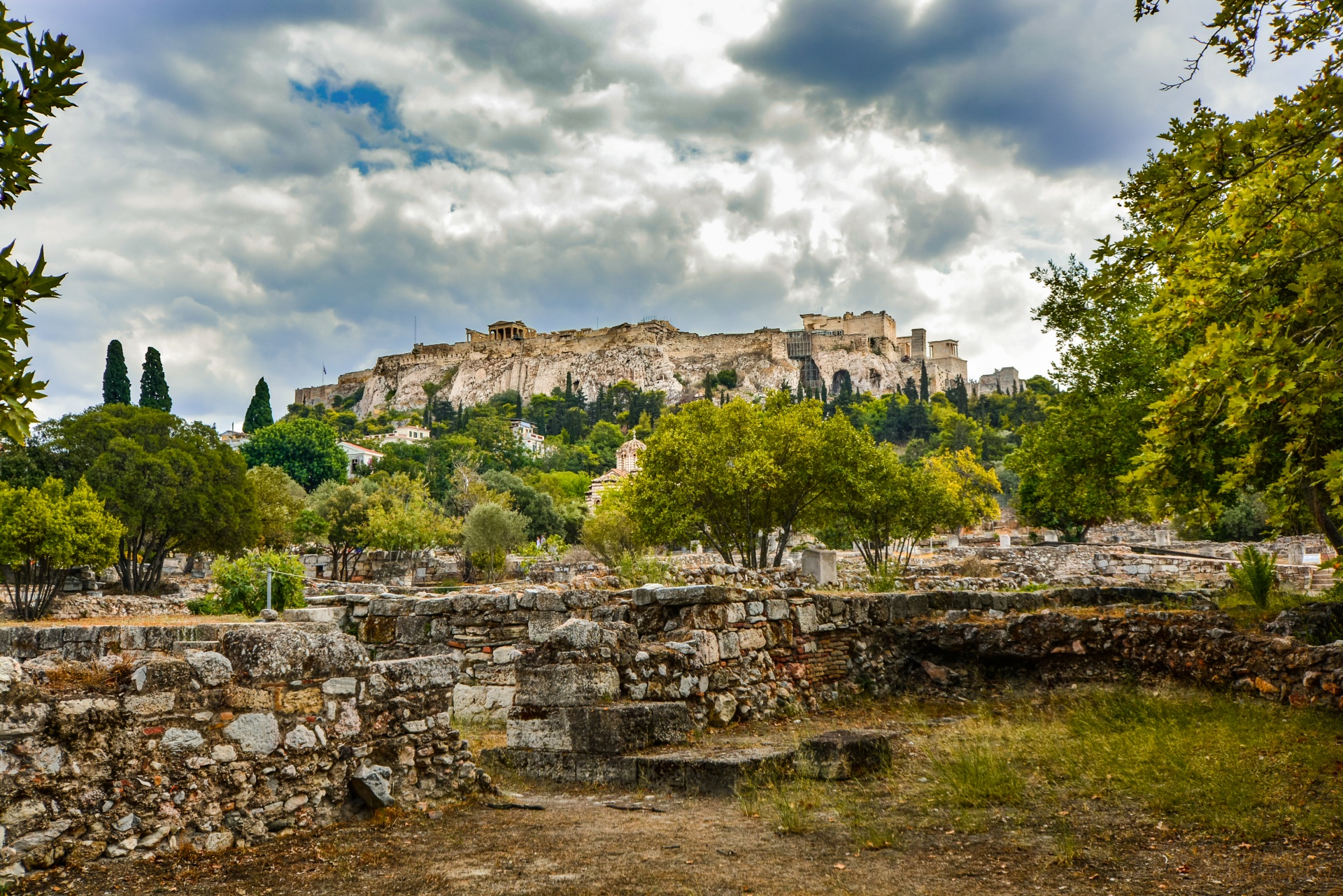
The modern world rarely pauses to consider the buildings that surround it. Streets are lined with glass and steel, offices are constructed to maximize space rather than beauty, and housing is measured by efficiency rather than permanence. Yet in the midst of these structures, classical architecture endures. It is found in courthouses, in university campuses, in government buildings, and in scattered monuments that stand as reminders of a tradition that once defined how societies expressed their ideals. To understand why these buildings matter, even now, is to reflect not only on their form, but on the values they carry and the conversations that they continue to provoke.
Classical architecture, rooted in the practices of ancient Greece and Rome, was never simply about shelter. It was an expression of harmony, proportion, order, and wisdom; principles that were believed to reflect the structure of the universe itself. When you look at the columns of the Parthenon, the arches of the Colosseum, the remains of Delphi, or the domes that crown Roman basilicas, you are destined to see far more than stone. You see the imprint of a people who sought to embody their highest aspirations in built form. Architecture, in this sense, was not functional alone. It was civic, spiritual, symbolic, and purposely planned to inspire; a signaling of the divine.
The endurance of classical forms is evident across millennia. The Renaissance revived them as artists and patrons sought to reconnect with antiquity. The Enlightenment embraced them as symbols of reason and balance. The American republic adopted them as visual representations of democracy and stability. These revivals remind us that classical architecture has never been confined to its original moment. Instead, it has been reinterpreted by each generation that returned to it, searching for an anchor to the past to guide the uncertainties of the present and the unpredictability of the days that yet await us.
Why does this matter to us today? In part, because architecture shapes the way we live and think, often without our purposely noticing. A building that conveys strength and order tells its visitors that the institution within is meant to endure any and all external forces. A structure that emphasizes openness and light signals welcome. Classical buildings, with their balance and grandeur, communicate permanence, a sense that what happens inside is not fleeting but connected to something far greater that is difficult to put into words. When a citizen walks up the steps of a courthouse framed by Corinthian columns, there is an unspoken message that justice is part of a long, winding, and continuous process that, eventually, bends toward the positive and the good.
At the same time, classical architecture also challenges us. Its endurance raises the question of what values we continue to hold in common. To imitate the Greeks and Romans is to acknowledge a dialogue with their ideas of order, citizenship, naturalism, and public life. This can be uncomfortable to the modern audience, for those civilizations were far from perfect. Rome built monuments on the backs of slaves, and Greece excluded many from its definition of the polis. Yet their architecture reminds us that societies have always expressed their highest ideals in physical form, even when their realities fell far short, just as, in many cases, they continue to to this day. To live among their columns today is to be asked whether we are willing to confront the gap between principles and practice.
The political resonance of classical architecture remains powerful. In the United States, the Capitol dome, the Lincoln Memorial, and countless statehouses echo Roman and Greek precedents. These were deliberate choices. The founders and their successors sought to tie the new republic to the visual language of antiquity, presenting democracy as an heir to Athens and a rival to Rome. The architecture itself became a political statement, asserting that a modern nation could ground its legitimacy in ancient forms. Visitors today still sense the weight of that claim when they stand beneath the marble columns of Washington, D.C.
Universities, too, often surround themselves with classical forms. The campus quadrangle, lined with colonnades and porticoes, suggests continuity with the seemingly eternal traditions of learning that stretch back at least to Plato’s Academy. Whether or not students consciously register this, the message remains: education is not ephemeral, but rooted in centuries of inquiry and reflection. Even when courses are taught on laptops and research is conducted in digital labs, the architectural frame reminds all who enter that learning belongs to a story much larger than the present moment.
Yet it would be misleading to imagine classical architecture as only a relic of the past. Its principles still inspire modern architects who adapt symmetry and proportion to contemporary needs. You see this in museums that blend glass with colonnades, in civic spaces that incorporate classical facades into new materials, and in memorials that borrow the solemnity of ancient forms while addressing the tragedies of recent history. The vocabulary of classical design remains alive, even when translated into different idioms.
What does this continued use reveal about us? It suggests that in times of uncertainty, we seek grounding in permanence. A skyscraper of glass may impress with its height, but it rarely reassures. A courthouse with Doric columns, by contrast, conveys stability, even if its construction is more modest. The classical form assures us that what is built is meant to last, and that the values inside are not at the mercy of passing trends. In an age of constant change, this reassurance has particular significance.
Still, there are critics who argue that clinging to classical forms is nostalgic, or even reactionary. They suggest that modern societies should invent new styles that reflect their diversity and technological innovation. This critique has merit, for a culture cannot live entirely in the shadow of its predecessors. Yet the persistence of classical architecture does not necessarily signal retreat. Rather, it reflects an ongoing dialogue between past and present, an acknowledgment that while societies change, the human longing for harmony and order remains. The forms endure because the aspirations they embody remain unresolved.
The debate over architecture is therefore more than aesthetic. It is a debate over how we conceive ourselves as communities. Buildings are not neutral containers, but participants in public life. They guide behavior and embody ideals. When cities choose to build courthouses or memorials in classical style, they make a statement about the seriousness of justice or the dignity of memory. When they choose more transient forms, they suggest a different set of values. The choice between styles is not trivial. It reflects decisions about how a society understands itself and what it wishes to project to the future.
One of the more revealing aspects of classical architecture is its emphasis on public space. The forum and the agora were not private estates, but places where citizens gathered. Their colonnades sheltered debate, commerce, and civic ritual. When these forms are revived in modern cities, they carry with them an echo of that original purpose. A library with a grand portico invites the community to enter as participants in shared knowledge. A museum designed in classical style signals that its contents belong to the public, not to a select few. Architecture, in this sense, is both symbolic and functional, shaping the experience of citizenship.
This may help explain why classical architecture is so often invoked in moments of national aspiration or crisis. After wars, revolutions, and upheavals, societies return to the familiar language of columns and domes as if to assure themselves that continuity remains. It is not only the strength of the stone that matters, but the continuity of the ideals the stone represents. Even when those ideals are contested, the architecture provides a common frame for debate. In this way, classical architecture functions not as nostalgia, but as a stage upon which societies negotiate their identities.
If we reflect on the significance of classical architecture to today, we must also ask how it can inform the future. The danger lies not in continuing to build in classical forms, but in doing so without reflection, as if copying a facade were enough to preserve meaning. To take classical architecture seriously requires more than imitation. It requires considering what principles the ancients sought to express and how those principles might be reinterpreted in our own time. Symmetry and proportion cannot be mere decoration; they must serve living communities. Grandeur must not intimidate but inspire. Permanence must not ossify into exclusion, but invite participation.
Perhaps the most important lesson classical architecture offers is the reminder that buildings are moral as well as physical structures. They embody visions of order, justice, and community. To walk among their columns is to be asked what we believe about ourselves and what we wish to endure. This is why their presence matters in an age of rapid construction and disposable design. They slow us down, remind us of continuity, and challenge us to consider whether our own lives are guided by values as enduring as the walls that shelter us.
In the end, the significance of classical architecture today lies not in its age, nor even in its beauty, but in its invitation to reflect. Each column, each arch, each dome is a reminder that societies have always sought to embody their ideals in built form, and that those ideals still matter. The question is not whether we will continue to build in classical style, but whether we will recognize the responsibility that such forms carry. They are not ornaments, but arguments. They insist that what we build reveals who we are. And in answering that insistence, we find ourselves drawn into the same conversation that began on the Acropolis and in the Roman forum, a conversation that still asks us to consider what is worth preserving, and what vision of community we wish to leave behind.
 For The Love Of Classics