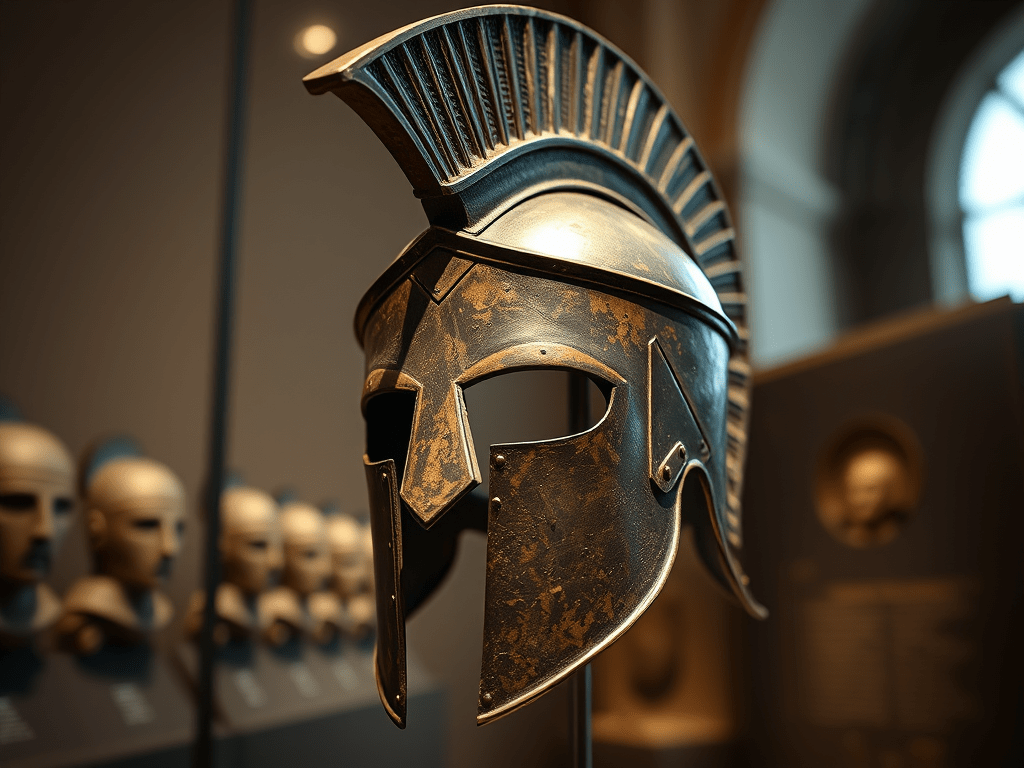
If you may be looking to start a heated debate among historians—or simply among your friends who just watched 300 for the umpteenth time—consider bringing up Sparta. To little surprise, few ancient societies inspire such polarized reactions. For some, Sparta was a model of discipline, unity, and self-sacrifice. Yet, for others, it was a repressive, xenophobic state that sacrificed freedom for order.
Two and a half millennia later, we’re still arguing. Here are some possible reasons why.
The Spartan Mirage
Much of what we “know”, or understand, about Sparta comes from outsiders—Athenian writers like Thucydides and Xenophon, or later Romans who projected their own ideals and sensibilities onto the past. Notably, the Spartans themselves kept few written records. As such, Sparta’s image has always been a kind of mirage—half-history, half-idealized myth.
For admirers, this mirage shows a society where every citizen put the collective above the individual, military readiness above personal comfort, and civic duty above private gain. For critics, the same system crushed individuality, enslaved an entire population (the Helots), and relied on a militarized elite that was constantly on the cusp of collapse.
Discipline vs. Freedom
The Spartan education system, the agoge, has been romanticized as a crucible for producing the world’s best soldiers. Boys learned endurance, obedience, and communal responsibility. But they also lived under surveillance, with state control reaching into nearly every aspect of life.
It’s the age-old political question: can you have total unity without sacrificing freedom? Athens would have said no. Sparta’s answer was yes—at least for the ruling class.
The Helot Question
Every Spartan hoplite stood on the shoulders of multiple helots—enslaved laborers from conquered Messenia who farmed the land so Spartan citizens could train for war. The system was brutally efficient but morally indefensible by modern standards. Periodic uprisings, met with ruthless suppression, were a reminder that Spartan stability rested on systemic oppression.
This is one reason modern commentators split sharply: those who admire Spartan discipline often downplay the helot system, while critics point to it as proof that the “Spartan Ideal” was built on injustice.
From Thermopylae to the Gym
Sparta’s most famous stand—at Thermopylae in 480 BCE—has been retold endlessly as the ultimate underdog story: 300 Spartans holding off the Persian army. This battle, filtered through Herodotus, Frank Miller, and Hollywood, transformed Sparta into a timeless symbol of courage.
That image has been picked up in surprising places—from nationalist propaganda to CrossFit gyms. Spartan “branding” sells toughness and discipline, but it also erases the more complex (and some may say troubling) realities of their society.
Why We Still Argue
Sparta is a mirror. If you value collective discipline, you’ll see it as a lost golden age. If you value individual liberty, you’ll see it as a cautionary tale. Either way, the conversation isn’t really about the past—it’s about the kind of society we hope to live in now.
And that’s why, 2,500 years later, the debate over Sparta is still very much alive.
Closing Reflection:
The truth is, Sparta was both admirable and abhorrent—fierce defenders of their way of life, yet unyielding in their oppression of others. The question is not whether we admire them, but whether we understand that the virtues they embodied came with a price we might not be willing to pay today.
 For The Love Of Classics